Pharmacology and effects of cannabis: a brief review
Substance
Misuse Papers
ASHTON,
C. HEATHER
The British Journal of Psychiatry
C. HEATHER ASHTON, FRCP, Emeritus Professor of Clinical Psychopharmacology, University of Newcastle upon Tyne, Department of Psychiatry, Royal Victoria Infirmary, Newcastle upon Tyne NEI 4LP
†See editorial, p. 98, this issue.
(First received 22 July 1999, final revision 24 November 1999, accepted 24 November 1999)
Outline
- Abstract
- SOURCES OF CANNABINOIDS
- PREVALENCE OF CANNABIS USE
- PHARMACOKINETICS OF CANNABINOIDS
- PHARMACODYNAMICS OF CANNABINOIDS
- ACTIONS OF CANNABIS IN HUMANS
- Psychological effects
- Effect on mood
- Effects on perception
- Effects on cognition and psychomotor performance
- Driving and piloting skills
- Long-term effects of chronic use
- Tolerance, dependence, withdrawal effects
- Systemic effects
- REFERENCES
Abstract
Background: Increasing prevalence of recreational cannabis use among the young population has stimulated debate on the possible effects of acute and long-term use.
Aims: To highlight recent knowledge of mechanisms of action, effects on psychomotor and cognitive performance, and health risks associated with cannabis consumption.
Method: A brief review of recent literature on the prevalence of recreational cannabis use, the potency of modern cannabis preparations and the pharmacological actions of cannabis.
Results: Cannabinoids derived from herbal cannabis interact with endogenous cannabinoid systems in the body. Actions on specific brain receptors cause dose-related impairments of psychomotor performance with implications for car and train driving, aeroplane piloting and academic performance. Other constituents of cannabis smoke carry respiratory and cardiovascular health risks similar to those of tobacco smoke.
Conclusions: Cannabis is not, as widely perceived, a harmless drug but poses risks to the individual and to society.
Declaration of interest: None.
Herbal cannabis contains over 400 compounds including over 60 cannabinoids, which are aryl-substituted meroterpenes unique to the plant genus Cannabis. The pharmacology of most of the cannabinoids is largely unknown but the most potent psychoactive agent, [DELTA]9-tetrahydrocannabinol ([DELTA]9-THC, or THC), has been isolated, synthesised and much studied. Other plant cannabinoids include [DELTA]8-THC, cannabinol and cannabidiol ( Fig. 1, Table 1). These and other cannabinoids have additive, synergistic or antagonistic effects with THC and may modify its actions when herbal cannabis is smoked. Synthetic cannabinoids such as nabilone and others are also available for therapeutic and research purposes. Non-cannabinoid constituents of the plant are similar to those found in tobacco (with the exception of nicotine). Recent research on the pharmacology and effects of cannabis and cannabinoids is briefly reviewed here.
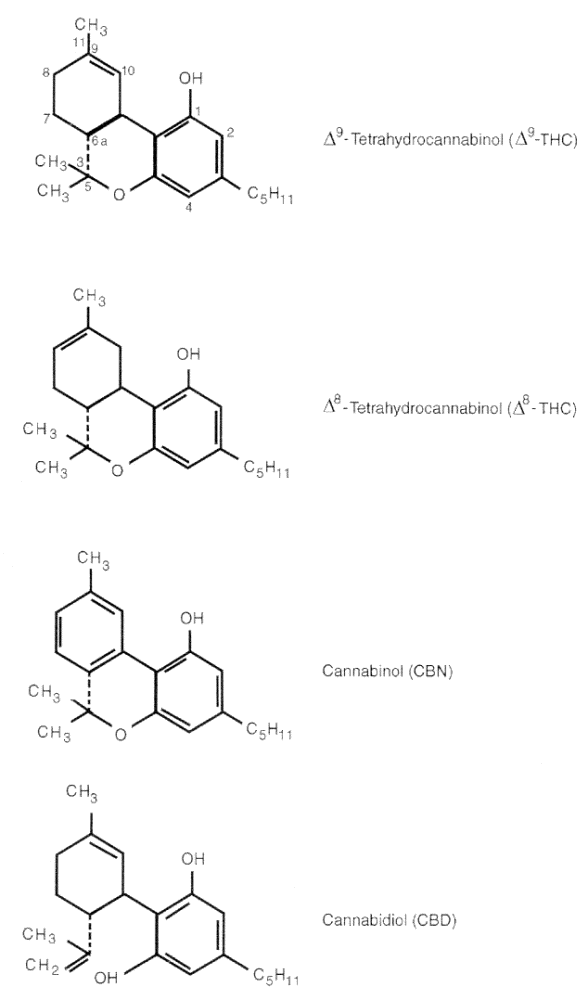 |
Fig. 1 Chemical structure of main cannabinoids in Cannabis sativa.
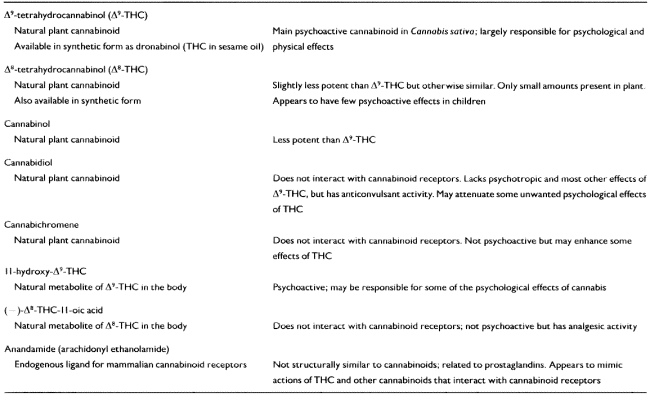 |
Table 1 Some natural cannabinoids and their properties
SOURCES OF CANNABINOIDS
Cannabinoids are present in the stalks, leaves, flowers and seeds of the plant, and also in the resin secreted by the female plant. The THC content varies tremendously between different sources and preparations of cannabis (Table 2). Over the past 20 years, sophisticated cultivation (such as hydroponic farming) and plant-breeding techniques have greatly increased the potency of cannabis products. In the 'flower power' days of the 1960s and 1970s an average reefer contained about 10 mg of THC. Now a joint made out of skunkweed, netherweed and other potent subspecies of Cannabis sativa may contain around 150 mg of THC, or 300 mg if laced with hashish oil. Thus, the modern cannabis smoker may be exposed to doses of THC many times greater than his or her counterpart in the 1960s and 1970s (Mendelson, 1987; Gold, 1991; Schwartz, 1991; World Health Organization, 1997; Solowij, 1998). This fact is important since the effects of THC are dose-related and most of the research on cannabis was carried out in the 1970s using doses of 5-25 mg THC (World Health Organization, 1997). Gold (1991, p. 356) remarks: "This single fact has made obsolete much of what we once knew about the risks and consequences of marijuana use".
 |
Table 2 Preparations of cannabis (USA and UK)
In the UK at present, many recreational users grow their own supplies of high-potency cannabis (exact details of how to grow it can be obtained on the internet). Another main source is imports from Holland (also high-potency) and home growers can obtain seeds in Amsterdam at £10-£50 for 10 seeds, depending on potency. Cannabis can be smoked as joints, from pipes, or from 'buckets', by inhaling from a mass of plant or resin ignited in a sawn-off plastic bottle. It can also be eaten, baked into cookies or cakes or occasionally drunk as an extract. It is unsuitable for intravenous use as it is relatively water insoluble, although it has been dissolved in alcohol and delivered as a fast-flowing saline infusion for research purposes.
PREVALENCE OF CANNABIS USE
The prevalence of cannabis use has increased markedly over the past decade in
young people in the UK, although patterns of consumption vary between different
social groups. A survey of 3075 university students from 10 UK universities (Webb
et al, 1996) found that about 60% had some experience with cannabis; nearly
25% had tried it more than once or twice and 20% of students reported regular
use (weekly or more frequently). Experience with cannabis had usually started
at school, and other surveys have shown that 30-40% of 15- to 16-year-olds have
tried it (Miller & Plant, 1996).
Among 785 second-year medical students from seven UK medical schools surveyed in 1996, 46% reported cannabis use and 10% were taking it at least once a week (Webb et al, 1998). A survey of 90 house officers found that nearly 30% reported current cannabis use and 11% used it weekly or monthly (Birch et al, 1998).
These users are fairly moderate compared with some others. Some users report daily cannabis use, smoking up to 15 or more joints daily. Many of these are unemployed youths who smoke to obtain a high level of intoxication and may be exposed to several hundreds of milligrams of THC daily. Other groups with a high prevalence of cannabis use are alcohol and polydrug misusers and psychiatric patients.
PHARMACOKINETICS
OF CANNABINOIDS
The pharmacokinetics of cannabinoids are reviewed by Agurell et
al (1986) and Maykut (1985) and others. About 50% of the
THC in a joint of herbal cannabis is inhaled in the mainstream smoke; nearly all
of this is absorbed through the lungs, rapidly enters the bloodstream and reaches
the brain within minutes. Effects are perceptible within seconds and fully apparent
in a few minutes. Bioavailability after oral ingestion is much less; blood concentrations
reached are 25-30% of those obtained by smoking the same dose, partly because
of first-pass metabolism in the liver. The onset of effect is delayed (0.5-2 hours)
but the duration is prolonged because of continued slow absorption from the gut.
Once absorbed, THC and other cannabinoids are rapidly distributed to all other tissues at rates dependent on the blood flow (Fig. 2). Because they are extremely lipid soluble, cannabinoids accumulate in fatty tissues, reaching peak concentrations in 4-5 days. They are then slowly released back into other body compartments, including the brain. Because of the sequestration in fat, the tissue elimination half-life of THC is about 7 days, and complete elimination of a single dose may take up to 30 days (Maykut, 1985). Clearly, with repeated dosage, high levels of cannabinoids can accumulate in the body and continue to reach the brain. Within the brain, THC and other cannabinoids are differentially distributed. High concentrations are reached in neocortical, limbic, sensory and motor areas.
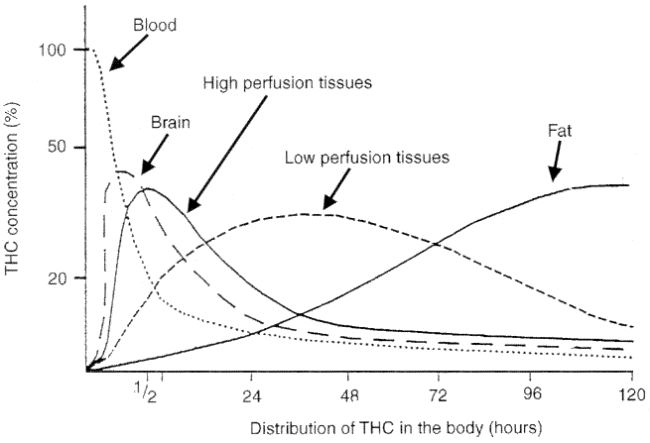 |
Fig. 2 Distribution of THC in the body. The distribution of THC after a single administration in plasma and body tissues. Note the 'biphasic' disappearance in plasma. The rapid phase (in minutes) indicates a rapid uptake of the drug by fat-containing tissues. The slow phase (in days) shows the release of THC by these tissues (Nahas, 1975). THC, tetrahydrocannabinol.
Cannabinoids are metabolised in the liver. A major metabolite is 11-hydroxy-THC which is possibly more potent than THC itself and may be responsible for some of the effects of cannabis. More than 20 other metabolites are known, some of which are psychoactive and all of which have long half-lives of several days. The metabolites are partly excreted in the urine (25%) but mainly into the gut (65%) from which they are reabsorbed, further prolonging their actions. Because of the pharmacokinetic characteristics of cannabinoids - both the sequestration in fat and the presence of active metabolites - there is a very poor relationship between plasma or urine concentrations and degree of cannabinoid-induced intoxication.
PHARMACODYNAMICS OF CANNABINOIDS
Cannabinoids exert their effect by interaction with specific endogenous cannabinoid
receptors, discovered by Devane et al (1988). Neuronal cannabinoid
receptors are termed CB1 receptors and have been found in rat, guinea
pig, dog, monkey, pig and human brains and peripheral nerves. A second cannabinoid
receptor, the CB2 receptor, was identified by Munro et
al (1993) in macrophages in the spleen and is also present in other immune
cells. The distribution of CB1 receptors is very similar to that of
injected THC and includes cerebral cortex, limbic areas (including hippocampus
and amygdala), basal ganglia, cerebellum, thalamus and brainstem (Herkenham,
1995).
The discovery of cannabinoid receptors naturally stimulated a search for an endogenous ligand with which the receptors naturally interact. Such a substance was isolated from the pig brain by Devane et al (1992). It was found to be chemically different from plant cannabinoids: it is a derivative of the fatty acid arachidonic acid (arachidonyl ethanolamide) related to the prostaglandins (Fig. 3). This endogenous substance was named anandamide after the Sanskrit word for bliss, ananda. It has a high affinity for CB1 receptors and has most of the actions of THC. Thus, the story of opium, opioid receptors and endogenous opioids is now repeated with cannabis, cannabinoid receptors and anandamides.
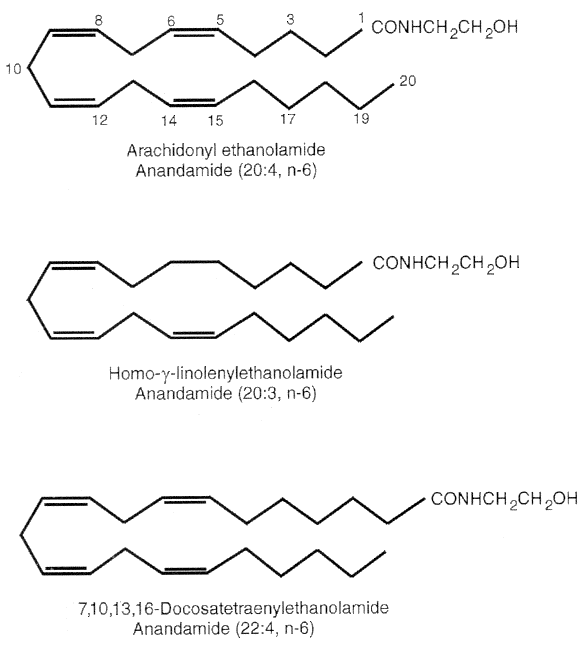 |
Fig. 3 Chemical structure of anandamides.
Two similar endogenous fatty acids have since been isolated (Fig. 3) and it now appears that there may be a whole system of multiple cannabinoid receptors and anandamide-related substances. Their physiological function has yet to be elucidated (see Pertwee, 1995, for a review). It appears that both anandamides and their receptors reside within neuronal lipid membranes and act as neuromodulators through intracellular G-proteins controlling cyclic adenosine monophosphate formation and Ca2+ and K+ ion transport. In this role the system may have important interactions with other neurotransmitters, including [gamma]-aminobutyric acid, opioid systems and monoamines. In particular, THC has been shown to increase the release of dopamine from the nucleus accumbens and prefrontal cortex (Tanda et al, 1997). This effect, which is common to many drugs of misuse (including heroin, cocaine, amphetamine and nicotinc), may be the basis of its reinforcing properties and its recreational use. It is reversed by naloxone, suggesting an opioid link.
ACTIONS OF CANNABIS IN HUMANS
Cannabis affects almost every body system. It combines many of the properties
of alcohol, tranquillisers, opiates and hallucinogens; it is anxiolytic, sedative,
analgesic, psychedelic; it stimulates appetite and has many systemic effects.
In addition, its acute toxicity is extremely low: no deaths directly due to acute
cannabis use have ever been reported. Only a selection of cannabis effects are
described in this review; other actions are reviewed by Paton &
Pertwee (1973), Pertwee (1995), Adams &
Martin (1996) and many others.
Psychological effects
Effect on mood
The main feature of the recreational use of cannabis is that it produces a euphoriant
effect or 'high'. The high can be induced with doses of THC as low as 2.5 mg in
a herbal cigarette and includes a feeling of intoxication, with decreased anxiety,
alertness, depression and tension and increased sociability (if taken in friendly
surroundings). The high comes on within minutes of smoking and then reaches a
plateau lasting 2 hours or more, depending on dose. It is not surprising that
the overwhelming reason for taking cannabis given by recreational users is simply
'pleasure' (Webb et al, 1996, 1998). However, cannabis can
also produce dysphoric reactions, including severe anxiety and panic, paranoia
and psychosis. These reactions are dose-related and more common in naïve
users, anxious subjects and psychologically vulnerable individuals. (Psychiatric
reactions including aggravation or precipitation of schizophrenia are described
by Johns, 2001, this issue).
Effects on perception
Accompanying the high, and often contributing to it, cannabis produces perceptual
changes. Colours may seem brighter, music more vivid, emotions more poignant and
meaningful. Spatial perception is distorted and time perception is impaired so
that perceived time goes faster than clock time. Hallucinations may occur with
high doses.
Effects on cognition and psychomotor performance
Not surprisingly, cannabis impairs cognitive and psychomotor performance. The
effects are similar to those of alcohol and benzodiazepines and include slowing
of reaction time, motor incoordination, specific defects in short-term memory,
difficulty in concentration and particular impairment in complex tasks which require
divided attention. The effects are dose-related but can be demonstrated after
relatively small doses (5-10 mg THC in a joint), even in experienced cannabis
users, and have been shown in many studies across a wide range of neurocognitive
and psychomotor tests. These effects are additive with those of other central
nervous system depressants.
Driving and piloting skills
These effects combine to affect skills related to driving a vehicle or flying
an aeroplane. Numerous studies have shown that cannabis impairs road-driving performance
and have linked cannabis use with increased incidence of road traffic accidents.
In the UK, USA, Australia, New Zealand and many European countries, cannabis is
the most common drug, apart from alcohol, to be detected in drivers involved in
fatal accidents or stopped for impaired driving. A large proportion of such drivers
have not taken alcohol or have concentrations below the legal limit. For example,
in two studies from the UK Department of Transport (Everest et al,
1989; Department of Environment, Transport and the Regions, 1998), no alcohol
was detected post-mortem in 70% and 80%, respectively, in road traffic accident
fatalities testing positive for cannabis. In Australia (Road Safety
Committee, 1995) only half of surviving drivers of vehicle collisions involving
death or life-threatening injuries who tested positive for cannabis had also taken
alcohol. In Norway, 56% of a sample of drug-impaired drivers negative for alcohol
gave positive blood samples for THC (Gjerde & Kinn, 1991).
From the USA, McBay (1986) had earlier found that 75% of a sample
of drivers with cannabinoids in their blood were also intoxicated with alcohol.
The World Health Organization (1997, p. 15) concluded:
"There is sufficient consistency and coherence from experimental studies and studies of cannabinoid levels among accident victims...to conclude that there is an increased risk of motor vehicle accidents among persons who drive when intoxicated with cannabis.... The risk is magnified when cannabis is combined with intoxicating doses of alcohol".
Piloting an aeroplane is an even more complex task than driving a car and cannabis has been shown in several investigations seriously to impair aircraft piloting skills. The results of one placebo-controlled study are shown in Fig. 4 (Leirer et al, 1991). The subjects were nine licensed pilots, highly trained in a flight simulator task, who were current cannabis users. They received a cannabis cigarette containing 20 mg THC (a moderate dose by present-day standards). This dose caused a significant decrement in performance compared with placebo and the impairment lasted over 24 hours after this single dose. Furthermore, most of the pilots were unaware that their performance was still impaired at 24 hours. Several pilots reported that they had actually flown while high on cannabis, and the authors noted that in at least one aeroplane crash the pilot was known to have taken cannabis some hours before flying and to have made a similar landing misjudgement (poor alignment on the runway) as was noted in experimental studies.
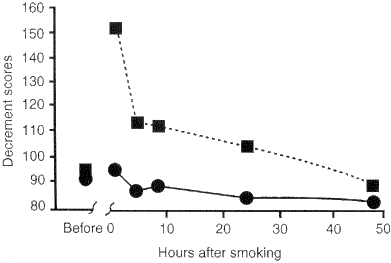 |
Fig. 4 Effect of smoking a cannabis cigarette containing 20 mg tetrahydrocannabinol (THC) on pilot performance in a flight simulator landing task (Leirer et al, 1991), [double dash, black square, double dash], 20 mg THC; [horizontal bar, black circle, horizontal bar], placebo.
There is evidence that similar longlasting impairments apply to motor cyclists, train drivers, signal operators, air traffic controllers and operators of heavy machinery. However, a problem is that because of the very slow elimination of cannabinoids, there is no accurate way of relating blood, urine, saliva or sweat concentrations to the degree of intoxication of the driver or pilot at the time of an accident, no way of telling exactly when the last dose was taken and no proof that cannabis was actually the cause of an accident.
Long-term effects of chronic use
There is considerable evidence, reviewed by Hall et al (1994),
that performance in heavy, chronic cannabis users remains impaired even when they
are not actually intoxicated. These impairments, especially of attention, memory
and ability to process complex information, can last for many weeks, months or
even years after cessation of cannabis use (Solowij, 1998).
Whether or not there is permanent cognitive impairment in heavy long-term users
is not clear.
Tolerance, dependence, withdrawal effects
Tolerance has been shown to develop to many effects of cannabis including the
high and many systemic effects, and a cannabis withdrawal syndrome has been clearly
demonstrated in controlled studies in both animals and man (Jones,
1983; Kouri et al, 1999). The withdrawal syndrome has similarities to alcohol,
opiate and benzodiazepine withdrawal states and includes restlessness, insomnia,
anxiety, increased aggression, anorexia, muscle tremor and autonomic effects.
A daily oral dose of 180 mg of THC (one or two modern, good-quality joints) for
11-21 days is sufficient to produce a well-defined withdrawal syndrome (Jones,
1983). The development of tolerance leads some cannabis users to escalate
dosage, and the presence of withdrawal syndrome encourages continued drug use.
Thus, chronic cannabis use can lead to drug dependence, and reports from the USA,
UK and New Zealand (Roffman & Barnhart, 1987; Stephens et al,
1993) indicate that many cannabis users are now seeking treatment for cannabis
dependence.
Systemic effects
Cardiovascular effects
Cannabinoids produce a dose-related tachycardia which may reach rates of up to
160 beats/minute or more, although tolerance develops with chronic use. There
is also a widespread vasodilation and reddening of the conjunctivae, a characteristic
sign of cannabis use (Paton & Pertwee, 1973). Postural hypotension
and fainting may occur. These and other cardiovascular effects may carry a risk
for individuals with preexisting cardiac disease, and several cases of acute and
sometimes fatal cardiac incidents have been reported in young cannabis smokers.
Effects on the respiratory system
The smoke from herbal cannabis preparations contains all the same constituents
(apart from nicotine) as tobacco smoke, including carbon monoxide, bronchial irritants,
tumour initiators (mutagens), tumour promoters and carcinogens (British
Medical Association, 1997). The tar from a cannabis cigarette contains higher
concentrations of benzanthracenes and benzpyrenes, both of which are carcinogens,
than tobacco smoke. It has been estimated that smoking a cannabis cigarette results
in approximately a fivefold greater increase in carboxyhaemoglobin concentration,
a three-fold greater amount of tar inhaled and retention in the respiratory tract
of one-third more tar than smoking a tobacco cigarette (Wu et al,
1988; Benson & Bentley, 1995). This is mainly due to the way a cannabis
joint is smoked, with deep and prolonged inhalation and no filter. In addition,
cannabis has a higher combustion temperature than tobacco.
Chronic cannabis smoking is associated with bronchitis and emphysema. It has been calculated that smoking 3-4 cannabis cigarettes a day is associated with the same evidence of acute and chronic bronchitis and the same degree of damage to the bronchial mucosa as 20 or more tobacco cigarettes a day (Benson & Bentley, 1995). Prospective studies of the long-term effects on the lungs of chronic cannabis smoking are lacking, but some authors suggest that chronic airways disease and bronchogenic carcinoma may be as great a risk as with tobacco smoking. In addition, there appears to be an increased incidence of rare forms of oropharyngeal cancer in young people who smoke cannabis chronically.
Effects
on other systems
Cannabis also has immunosuppressant and endocrine effects although the clinical
significance of these is still not clear. Chronic cannabis use appears to carry
reproductive risks, both to the mother during pregnancy and childbirth and to
the foetus and neonate, although these areas need further study. The full extent
of long-term health risks of chronic cannabis use (if today's young smokers continue
the habit) may require a latent period of 10-20 years to be revealed.
CLINICAL
IMPLICATIONS
* Cannabis use is associated with increased
risk of road, rail and air traffic accidents.
* Chronic
cannabis use can result in tolerance, dependence, withdrawal effects and possibly
long-term cognitive impairment.
* Long-term cannabis use
carries respiratory, cardiovascular and other health risks.
LIMITATIONS
* There is no clear relationship
between cannabinoid concentrations in body fluids and degree of psychomotor impairment,
making traffic-control policies difficult.
* Long-term prospective
controlled studies are needed to quantify the health risks of chronic cannabis
use.
* Further research is needed on the effects of individual
cannabinoids and their interactions with tetrahydrocannabinol.
REFERENCES
Adams, I. B. & Martin, B. R. (1996) Cannabis: pharmacology
and toxicology in animals and humans. Addiction, 91, 1585-1614.[Context
Link]
Agurell, S., Halldin, M., Lindgren, J.-E., et al (1986) Pharmacokinetics and metabolism of [DELTA]1-tetrahydrocannabinol and other cannabinoids with emphasis on man. Pharmacological Reviews, 38, 21-43. [Context Link]
Benson, M. & Bentley, A. M. (1995) Lung disease induced by drug addiction. Thorax, 50, 1125-1127. [Context Link]
Birch, D., Ashton, H. & Kamali, F. (1998) Alcohol drinking, illicit drug use and stress in junior house officers in the north east of England Lancet, 352, 785-786. [Context Link]
British Medical Association (1997) Therapeutic Uses of Cannabis. London: Harwood Academic. [Context Link]
Department of Environment, Transport and the Regions (DETR) (1998) Report on Incidence of Drugs in Road Accident Victims: Interim. Results of Survey. January. London: Department of Transport Publications. [Context Link]
Devane, W.A., Dysarz, F.A., Johnson, M.R., et al (1988) Determination and characterisation of a cannabinoid receptor in rat brain. Molecular Pharmacology, 34, 605. [Context Link]
Devane, W.A., Hanus, L., Breuer, A., et al (1992) Isolation and structure of a brain constituent that binds to the cannabinoid receptor. Science, 258, 1946-1949. [Context Link]
Everest, J.T., Tunbridge, R. J. & Widdop, B. (1989) The Incidence of Drugs in Road Accident Fatalities. Department of Transport and Road Research Laboratory Research Report 202. London: Department of Transport Publications. [Context Link]
Gjerde, H. & Kinn, G. (1991) Impairment in drivers due to cannabis. Forensic Science International, 50, 57-60. [Context Link]
Gold, M. S. (1991) Marijuana, In Comprehensive Handbook of Alcohol and Drug Addiction (ed. N. S. Miller), pp. 353-376. New York: Marcel Decker. [Context Link]
Hall, W. & Solowij, N. (1998) Adverse effects of cannabis. Lancet, 352, 1611-1615.
Hall, W., Solowij, N. & Lemon, J. (1994) The Health and Social Consequences of Cannabis Use. National Drug Strategy Monograph Series No. 25. Canberra: Australian Government Publishing Service. [Context Link]
Herkenham, M. (1995) Localization of cannabinoid receptors in brain and periphery. In Cannabinoid Receptors (ed. R. Pertwee), pp. 145-166. London: Academic Press. [Context Link]
Johns, A. (2001) Psychiatric effects of cannabis. British Journal of Psychiatry, 178, 116-22. [Context Link]
Jones, R. T. (1983) Cannabis tolerance and dependence. In Cannabis and Health Hazards (eds K. O. Fehr & H. Kalant). Toronto: Addiction Research Foundation. [Context Link]
Kouri, E. M., Harrison, G., Pope, G. Jr., et al (1999) Changes in aggressive behavior during withdrawal from long-term marijuana use. Psychopharmacology, 143, 302-308. [Context Link]
Leirer, V. O., Yesavage, J. A. & Morrow, D. G. (1991) Marijuana carry-over effects on aircraft pilot performance. Aviation & Space Environmental Medicine, 62, 221-227. [Context Link]
Maykut, M. O. (1985) Health consequences of acute and chronic marijuana use. Progress in Neuropsychopharmacology and Biological Psychiatry, 9, 209-238. [Context Link]
McBay, A. J. (1986) Drug concentrations and traffic safety. Alcohol, Drugs and Driving, 2, 51-59. [Context Link]
Mendelson, J. H. (1987) Marijuana. In Psychopharmacology: The Third Generation of Progress (ed. H. Y. Meltzer), pp. 1565-1568. New York: Raven Press. [Context Link]
Miller, P. McC. & Plant, M. (1996) Drinking, smoking and illicit drug use among 15 and 16 year olds in the United Kingdom. British Medical Journal, 313, 394-397. [Context Link]
Munro, S., Thomas, K. L. & Abu-Shaar, M. (1993) Molecular characterization of peripheral receptor for cannabinoids. Nature, 365, 61-65. [Context Link]
Nahas, G. G. (1975) Marijuana: toxicity and tolerance. In Medical Aspects of Drug Abuse (ed. R. W. Richter), pp. 16-36. Baltimore, MD: Harper & Row. [Context Link]
Paton, W. D. M. & Pertwee, R. G. (1973) The actions of cannabis in man. In Marijuana: Chemistry, Pharmacology, Metabolism and Clinical Effects (ed. R. Mechoulam), pp. 288-334. London: Academic Press. [Context Link]
Pertwee, R. G. (1995) Pharmacological, physiological and clinical implications of the discovery of cannabinoid receptors: an overview. In Cannabinoid Receptors (ed. R. G. Pertwee), pp. 1-34. London: Academic Press. [Context Link]
Road Safety Committee (1995) Inquiry into the Effects of Drugs (other than Alcohol) on Road Safety in Victoria. Melbourne: L. V. North, Government Printer. [Context Link]
Robertson, J. R., Miller, P. & Anderson, R. (1996) Cannabis use in the community. British Journal of General Proctice, 46, 671-674.
Roffman, R. A. & Barnhart, R. (1987) Assessing need for marijuana dependence treatment through anonymous telephone interviews. International Journal of Addictions, 22, 639-651. [Context Link]
Schwartz, R. H. (1991) Heavy marijuana use and recent memory impairment. In Physiopathology of Illicit Drugs: Cannabis, Cocaine, Opiates (eds G. G. Nahas & C. Latour), pp. 13-21. Oxford: Pergamon Press. [Context Link]
Solowij, N. (1998) Cannabis and Cognitive Functioning. Cambridge: Cambridge University Press. [Context Link]
Stephens, R. S., Roffman, R. A. & Simpson, E. E. (1993) Adult marijuana users seeking treatment. Journal of Consulting and Clinical Psychology, 61, 1100-1104. [Context Link]
Tanda, G., Pontieri, F. E. & Di Chiara, G. (1997) Cannabinoid and heroin activation of mesolimbic dopamine transmission by a common µ1 opioid receptor mechanism. Science, 276, 2048-2050. [Context Link]
Webb, E., Ashton, C. H., Kelly, P., et al (1996) Alcohol and drug use in UK university students. Lancet, 348, 922-925. [Context Link]
Webb, E., Ashton, C. H., Kelly, P., et al (1998) An update on British medical students' lifestyles. Medical Education, 32, 325-331. [Context Link]
World Health Organization (1997) Programme on Substance Abuse. Cannabis: A Health Perspective and Research Agenda. Geneva: WHO. [Context Link]
Wu, T.-C., Scott, R. T. A., Burnett, S. J., et al (1988) Pulmonary hazards of smoking marijuana as compared with tobacco. New England Journal of Medicine, 318, 347-351. [Context Link]